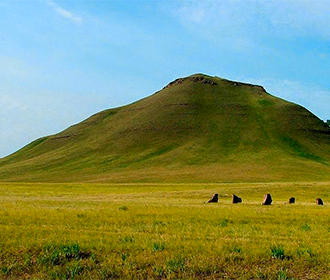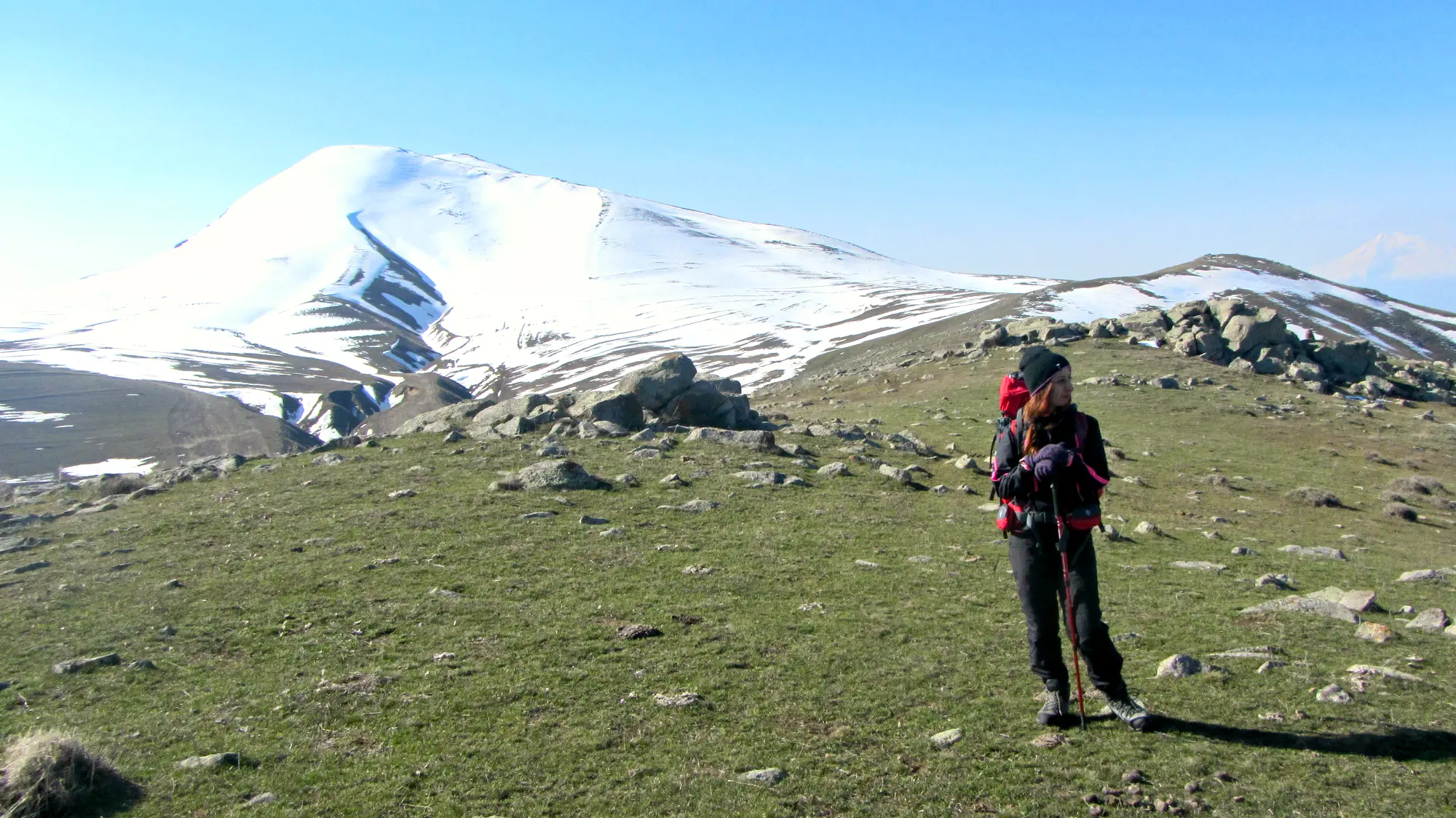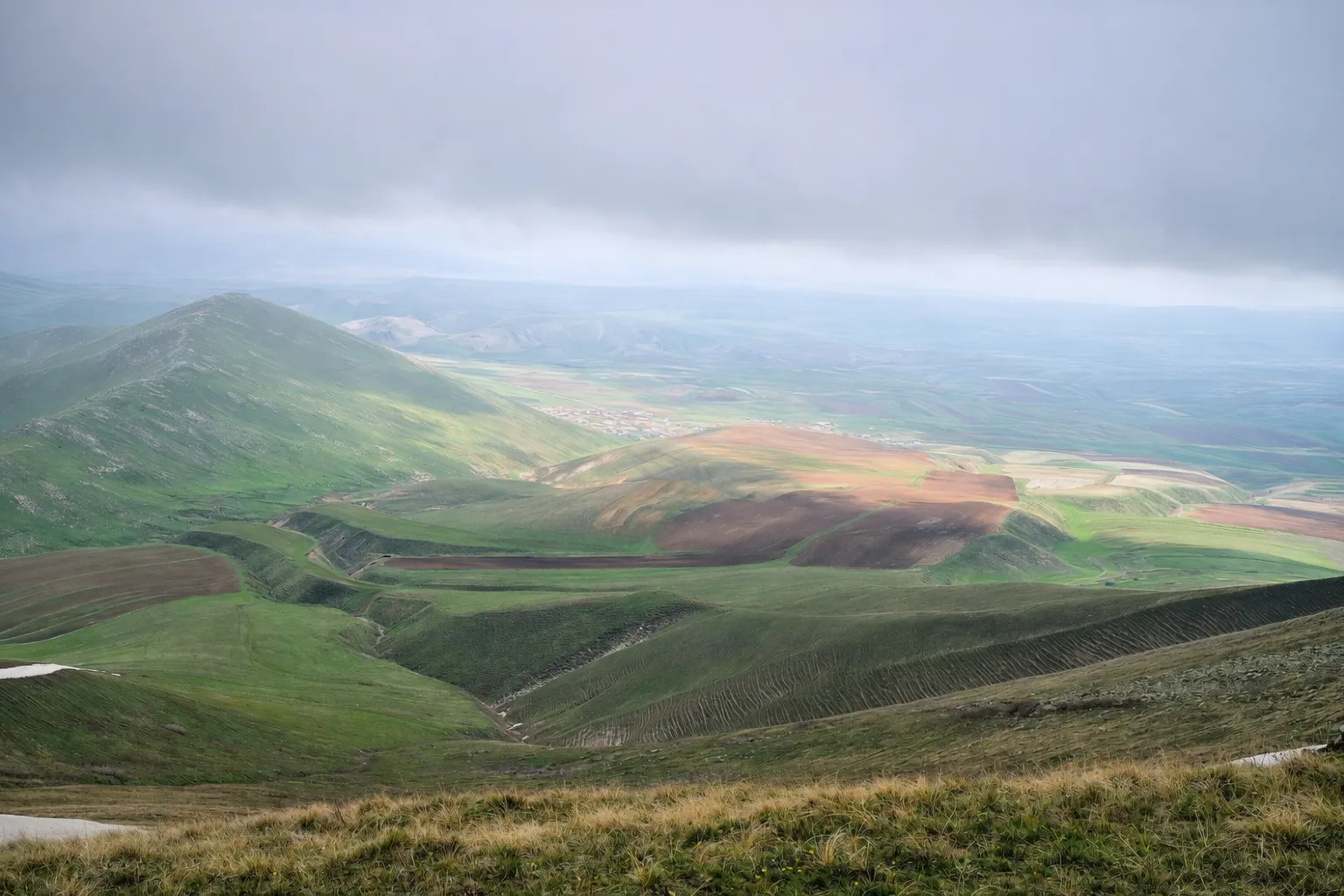
Mount Hatis is a dormant volcanic cone located in the Kotayk region of Armenia, rising to an elevation of 2,528 meters. Situated just 25 kilometers northeast of Yerevan, the mountain stands as a prominent landmark on the Armenian Highland, characterized by its near-perfect conical shape and its alpine meadows that transform into a vibrant carpet of wildflowers during the spring.
The mountain is steeped in ancient folklore and is widely known as "Shamiram’s Mountain." According to the famous legend, the Assyrian Queen Semiramis (Shamiram) positioned her troops on the slopes of Hatis during her campaign against the Armenian King Ara the Beautiful. From this vantage point, she watched the battle unfold in the valley below, hoping to capture the King she deeply admired.
From a geological perspective, Mount Hatis is an extinct volcano composed primarily of trachyte and obsidian. The mountain's surface is scattered with high-quality volcanic glass, which was prized by prehistoric inhabitants of the Armenian plateau for making tools and weapons. Today, the mountain is a favorite destination for paragliders and hikers, offering a moderate ascent that rewards visitors with a panoramic view of Mount Ararat, Mount Aragats, and the Geghama range.
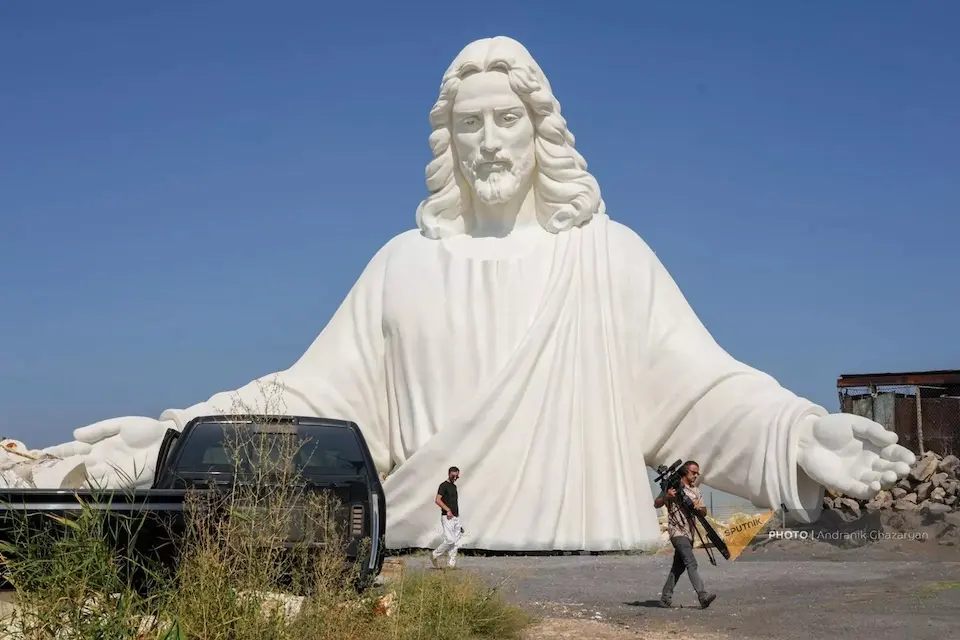
As of 2026, Mount Hatis is undergoing a dramatic transformation into a major international pilgrimage and tourism hub. The summit is now the site of the world’s tallest monument to Jesus Christ. Initiated by the Gagik Tsarukyan Foundation, the ambitious complex features a colossal aluminum statue standing 33 meters tall—symbolizing the years of Christ's life—perched atop a 44-meter pedestal, bringing the total height of the structure to a staggering 77 meters.
The slopes of Hatis also hold archaeological significance. Recent excavations have revealed the remains of an ancient fortress dating back to the Bronze and Iron Ages, suggesting that the mountain served as a strategic observation post for millennia. Its proximity to the city of Abovyan and the village of Kaputan makes it one of the most accessible yet mystical natural monuments in the region.